
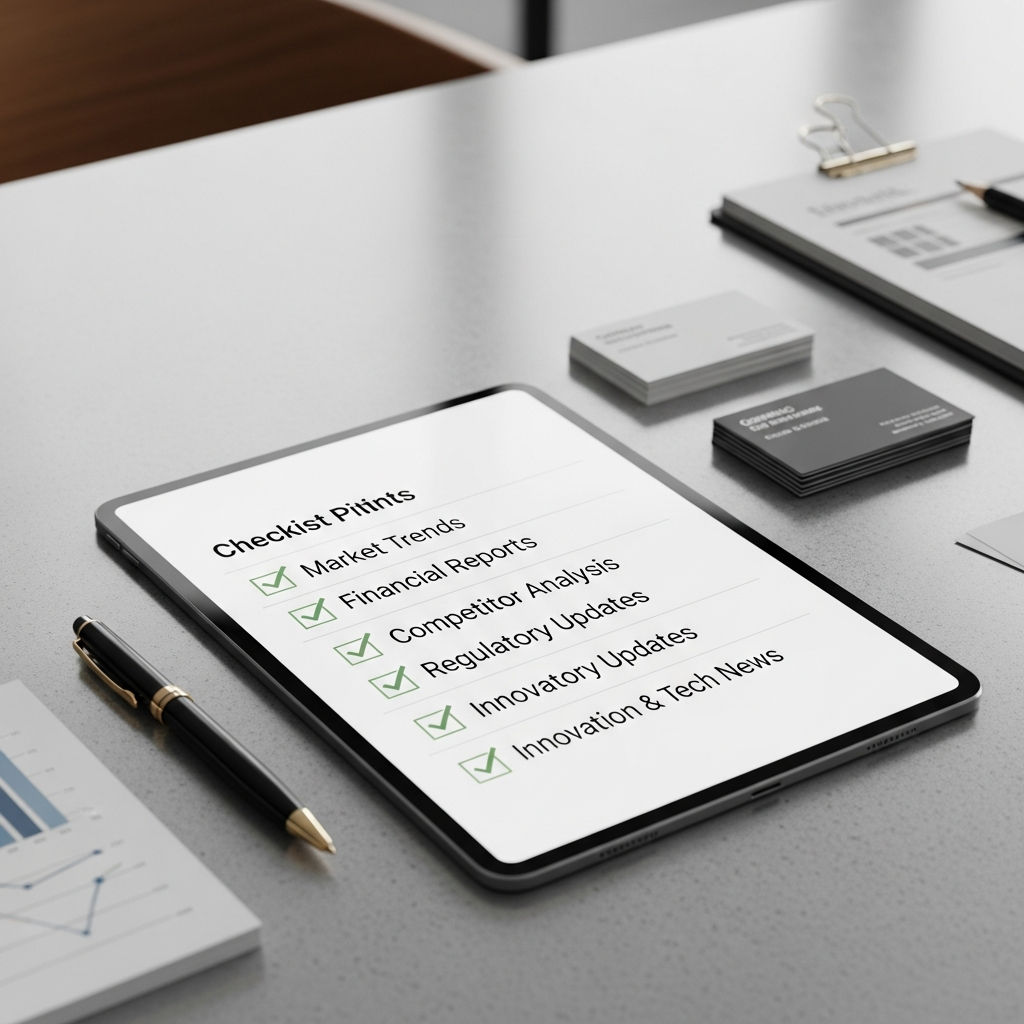
The Modern Checklist for Business News: Staying Ahead in a Fast-Paced Economy
In the era of the 24-hour news cycle, the definition of “business news” has undergone a radical transformation. Gone are the days when waiting for the morning paper was the only way to track stock prices or industry shifts. Today, information moves at the speed of a fiber-optic cable, and the sheer volume of data can be overwhelming for even the most seasoned professional.
To navigate this landscape, decision-makers need more than just a news feed; they need a framework. Whether you are an investor, an entrepreneur, or a corporate executive, following a modern checklist for business news ensures you aren’t just consuming content, but gaining actionable intelligence. This guide outlines the essential elements of a modern business news strategy.
Why Traditional Business News Isn’t Enough Anymore
Traditional business journalism focused heavily on quarterly earnings, mergers and acquisitions, and stock market fluctuations. While these remain important, they represent only a fraction of the forces driving today’s global economy. The rise of decentralized finance (DeFi), artificial intelligence, and global supply chain fragility means that business news now intersects with technology, politics, and sociology more than ever before.
The modern professional must look beyond the “what” and investigate the “why” and “how.” To do this effectively, your daily digest should pass through a rigorous checklist to ensure quality, relevance, and foresight.
The Essential Modern Checklist for Business News
1. Real-Time Data and Market Volatility
In a world of high-frequency trading and viral social media trends, timing is everything. Your checklist must prioritize sources that provide real-time updates without sacrificing accuracy.
- Live Tickers and Indices: Are you monitoring the S&P 500, Nasdaq, and niche sector indices relevant to your industry?
- Earnings Call Summaries: Beyond the press release, look for sentiment analysis of executive commentary during earnings calls.
- Volatility Alerts: Are you tracking the VIX or other indicators of market stress that could impact your portfolio or operations?
2. Technological Disruption and AI Integration
Every company is now a tech company. If your business news isn’t covering technological shifts, you’re missing the biggest driver of value in the 21st century. Your checklist should include:
- Artificial Intelligence: How are generative AI and automation transforming labor costs and product development?
- Cybersecurity: Are there reports of data breaches or new regulatory frameworks regarding digital privacy?
- SaaS and Infrastructure: Updates on cloud computing giants (AWS, Azure, Google Cloud) often signal broader shifts in corporate spending.
3. The ESG Factor: Sustainability and Ethics
Environmental, Social, and Governance (ESG) criteria are no longer “fringe” metrics. They are central to modern valuation. Investors and consumers alike demand transparency.
- Carbon Footprint and Regulations: Is the company compliant with new international carbon tax laws or green energy mandates?
- Diversity and Inclusion: Are leadership changes reflecting a commitment to diverse perspectives, which studies show lead to better financial outcomes?
- Ethical Supply Chains: Is there news regarding labor practices or sourcing ethics in the global supply chain?
4. The Human Element: Leadership and Culture
A company is only as strong as its people. Modern business news must track the “soft” metrics that lead to “hard” results. Pay attention to:
- Executive Turnover: Why are C-suite members leaving? Sudden departures often signal internal instability.
- Employee Sentiment: Platforms like Glassdoor and LinkedIn often provide “pre-news” insights into toxic cultures or mass layoffs before they hit the mainstream media.
- Remote Work Trends: How is the evolving “return to office” debate affecting commercial real estate and talent retention?
5. Macro-Economics and Geopolitics
No business operates in a vacuum. A conflict in Eastern Europe or a trade policy shift in Southeast Asia can have immediate impacts on local businesses. Your checklist should verify:
- Interest Rates and Central Bank Policy: Keep a close eye on the Federal Reserve and international counterparts.
- Geopolitical Stability: Are trade wars or sanctions likely to disrupt your specific industry?
- Inflationary Pressures: How is the Consumer Price Index (CPI) affecting purchasing power in your target markets?
How to Filter the Noise: Tools for the Modern Professional
Identifying what to look for is only half the battle. The other half is managing the delivery of that information. To prevent “information fatigue,” utilize these modern tools and techniques:
Curated Newsletters
Instead of browsing endless websites, subscribe to curated newsletters that synthesize the day’s events. Look for those that offer deep dives into specific niches, such as fintech, healthcare, or retail energy. The goal is to receive a “signal” rather than “noise.”
AI-Powered Aggregators
New AI tools can scan thousands of articles and summarize the key points relevant to your specific interests. These tools can help you identify patterns—such as multiple competitors investing in the same new technology—that you might miss by reading individual articles.
Social Media and Professional Networks
X (formerly Twitter) and LinkedIn remain vital for breaking news, but they require a critical eye. Use lists to follow verified analysts and industry experts rather than relying on a general algorithm-driven feed. Fact-checking is essential when news breaks on social media.
Podcasts and Audio Briefings
For the busy professional, audio is a powerful medium. Short-form daily business podcasts provide a high-level overview during commutes, ensuring you’re prepared for the first meeting of the day without needing to sit down with a screen.
The Importance of Fact-Checking in the Age of AI
One of the most critical items on any modern business news checklist is verification. With the rise of AI-generated content and “deepfake” financial reports, the risk of misinformation is at an all-time high. Before making a major financial or strategic decision based on news:
- Cross-Reference: Ensure the news is being reported by at least two or three reputable, independent sources.
- Check the Source: Is the information coming from a primary source (the company itself, a government agency) or a secondary interpretation?
- Look for Bias: Understand the perspective of the news outlet. Is the reporting objective, or is it an opinion piece designed to influence market sentiment?
Conclusion: Building Your Information Fortress
Staying informed in the modern business world is no longer a passive activity. It requires a deliberate strategy and a rigorous checklist. By focusing on data, technology, ESG, leadership, and geopolitics, you can move beyond the headlines and understand the underlying currents of the global economy.
Remember, the goal of consuming business news isn’t just to know what happened yesterday—it’s to anticipate what will happen tomorrow. By applying this modern checklist, you position yourself to make smarter decisions, mitigate risks, and seize opportunities before the rest of the market even knows they exist. In the fast-paced world of commerce, information is the most valuable currency you have. Spend it wisely.